There is no fixed rate. You buy at auction, and the price depends on your format, your targeting and the quality of your creative.
The benchmarks to keep in mind for 2026: expect roughly $0.01 to $0.03 per view on a cost-per-view basis, $4 to $12 per thousand impressions on CPM, and $1 to $3 per click on CPC depending on your industry and audience. On a cost-per-action basis, the range sits closer to $10 to $50 depending on your sector and your offer.
In practice, a $500 campaign can generate anywhere between 15,000 and 50,000 views depending on your targeting. That gap is enormous, and it is not decided by your budget. It is decided by two variables you control: the precision of your targeting and the performance of your creative.
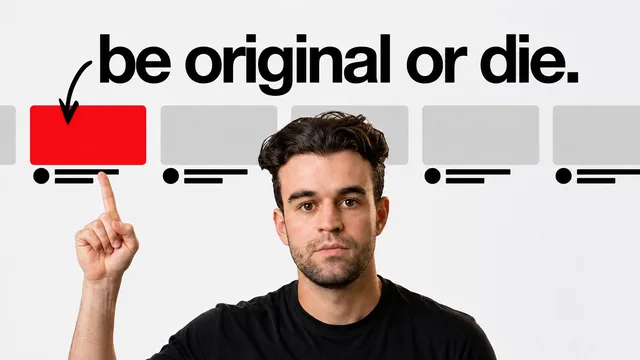
The second one is where most advertisers lose money. On in-feed formats, it is the thumbnail that triggers the click: a thumbnail that converts poorly mechanically drives up your cost per view, whatever you spend. That is exactly the problem Pikzels solves, generating click-optimised YouTube thumbnails in seconds so you can test several versions instead of being stuck with one.
Here is the detail of each format and what it really costs.
What are the YouTube ad formats and their prices?
YouTube does not bill every format the same way. Some charge per view, some per impression, some per click. Knowing which meter is running is the first step to controlling your budget.
Format | Characteristics | Billing model | Indicative range | Best suited to |
|---|---|---|---|---|
Skippable in-stream | Before or during a video, skip after 5 seconds | CPV: you pay after 30 seconds viewed, a full view, or an interaction | $0.01 to $0.03 per view | Traffic, conversions, consideration |
Non-skippable in-stream | 15 to 20 seconds, cannot be skipped | CPM | $9 to $27 per thousand impressions | Awareness, guaranteed reach |
Bumper | 6 seconds maximum, non-skippable | CPM | $4 to $13 per thousand impressions | Recall, message repetition |
In-feed | Thumbnail and title in suggestions and search | Per click on the thumbnail | $0.05 to $0.33 per click | Audience acquisition, channel growth |
Shorts | Between two Shorts, vertical format | CPM or CPV | $3 to $11 per thousand impressions | Younger audiences, volume |
Outstream | Off YouTube, on the mobile display network | Viewable CPM, billed beyond 6 seconds | $3 to $9 per thousand impressions | Extended mobile reach |
Masthead | Banner at the top of the homepage | Cost per day or CPM, reservation only | Budget negotiated with a Google sales team | Product launch, event |
These ranges are indicative. Your industry, your target country and the time of year can move them threefold. A B2B or luxury CPM will always run higher than a general-interest one.
Three formats absorb 90% of small-business budgets.
Skippable in-stream remains the most efficient place to start, because you only pay if someone actually watches. A viewer who skips after 4 seconds costs you nothing. It is the only format where poor targeting is partially free.
Bumper ads are cheap and bought on impressions, which means you pay even without real attention. They work through repetition, never alone: a single isolated bumper creates no recall.
In-feed is the most underused format. You only pay when someone clicks your thumbnail to watch. Your cost therefore depends directly on that thumbnail's click-through rate. Moving a thumbnail from 3% to 6% CTR cuts your acquisition cost in half, without changing a single targeting setting or a dollar of budget.
That is precisely where Pikzels has the most impact: generating several thumbnails in seconds lets you actually test, instead of launching a whole campaign on one thumbnail chosen on instinct.
One thing to note: Masthead and non-skippable formats are booked through a Google sales representative. They are not available self-service in Google Ads, and their entry budgets keep them in brand-campaign territory.
What minimum budget should you plan for a YouTube campaign?
Google Ads imposes no minimum budget. You can launch a campaign at $5 a day. The real question is not the technical minimum, it is the threshold at which the campaign produces usable data.
Level | Daily budget | Monthly budget | What you can realistically expect |
|---|---|---|---|
Minimum test | $11 to $22 | $330 to $660 | Validate one targeting setup and one creative, first CTR and view-rate signals |
Acquisition campaign | $33 to $77 | $990 to $2,300 | Exit the learning phase, optimise toward conversions |
Local or niche awareness | $55 to $110 | $1,650 to $3,300 | Real reach across a defined area or audience |
Brand campaign | $330 and above | $9,900 and above | Sufficient exposure frequency, non-skippable formats |
The critical threshold sits around $550 per month. Below that, you collect too little data to conclude anything: the algorithm never leaves its learning phase, and your results look more like statistical noise than a trend.
Plan a testing budget rather than a campaign budget. The practical rule: spend your first two or three weeks comparing two or three creatives on identical targeting, then move the entire budget onto the winner. Doing the opposite means paying for three weeks of delivery on an ad you never put in competition.
One last point that gets forgotten: production cost for the video and the visuals is not part of your media budget. On in-feed formats, the thumbnail determines your cost per click, and it is the line advertisers invest in least. Tools like Pikzels let you produce those variants for a few dollars, where an agency would bill a full day.
What makes YouTube ad prices vary?
Two advertisers spending the same budget on the same format can get results that differ fivefold. Here is what explains the gap.
Your industry
This is the heaviest factor. Finance, insurance, B2B software and real estate run CPMs several times higher than entertainment or fashion, simply because customer value is higher and the auction is more crowded.
Targeting precision
The tighter you target, the more you pay per impression. Reaching CFOs at companies with 200+ employees costs mechanically more than a broad interest-based audience. Conversely, targeting that is too broad lowers your CPM and inflates your cost per conversion. Optimisation is never about chasing the lowest CPM.
Country of delivery
Auctions are local. The United States, Switzerland, Norway and Australia are among the most expensive markets, while Eastern Europe and Latin America are among the cheapest. The same campaign can see its CPM drop fourfold simply by changing region.
Seasonality
Q4 drives every cost up. Black Friday, Christmas, sales periods: advertising demand rises and auctions follow. A campaign launched in November will cost considerably more than the same campaign in February.
The format you choose
Paying per view, per impression or per click does not protect you equally. On a skippable format, an uninterested viewer costs you nothing. On a bumper billed per thousand impressions, you pay for that same wasted impression.
Your creative performance
This is the only lever entirely under your control. A high view rate and a strong click-through rate improve your quality score, which directly reduces what you pay at each auction. On in-feed formats, the thumbnail is the first filter: it is what triggers the billable click. Doubling its CTR halves your acquisition cost without touching your budget. Testing several thumbnails with a tool like Pikzels costs a few dollars and usually moves the needle more than a full targeting rebuild.
Video length and structure
The first few seconds decide your retention rate, and therefore the volume of billable views on a skippable format. An ad that states its promise clearly within five seconds wastes less budget on abandoned views.
Account history
A new Google Ads account pays more than an established one with stable performance. The algorithm progressively grants better placements to advertisers whose behaviour it knows.
How to reduce your YouTube advertising costs?
Lowering your advertising cost is not about spending less. It is about paying less for the same result. These are the levers that produce measurable effects.
- Test several creatives before committing. Two or three versions on identical targeting for two weeks, then the full budget on the winner. This is the most profitable and most neglected lever of all.
- Work on your thumbnails for in-feed formats. You pay per click: moving CTR from 3% to 6% halves your acquisition cost at constant budget.
- Earn the first five seconds. On a skippable format, every viewer who stays past 30 seconds is billed to you. A clear promise up front avoids paying for views with no intent.
- Exclude unproductive placements. Kids' content, off-topic channels, mobile apps: manual placement exclusions typically recover 10% to 20% of wasted budget.
- Start broad, then narrow on the data. Targeting that is too tight from day one raises your CPM before the algorithm has learned anything.
- Avoid Q4 if you can. The same impressions cost noticeably more between November and December.
- Use remarketing audiences. Past site visitors convert far better, which lowers your cost per conversion even when the CPM is higher.
- Let campaigns run before optimising. Killing a campaign after three days prevents it from leaving the learning phase and destroys data you have already paid for.
- Track cost per conversion, not CPM. The lowest CPM almost always corresponds to the least qualified audience.
- Reuse organic videos that already perform. A video validated by your natural audience starts with better signals than a spot produced for the occasion.
A word on the first point, because it sums up all the others. Most advertisers optimise targeting and accept whatever creative they have. The reverse is what lowers costs: producing five thumbnails with Pikzels costs a few dollars and changes your cost per click more than three hours spent refining audiences.
YouTube ad pricing: what to remember
There is no rate card, only auctions. The benchmarks worth remembering are $0.01 to $0.03 per view, $4 to $27 per thousand impressions depending on format, and a genuinely usable budget threshold around $550 per month. Below that, you will not collect enough data to make a decision.
But those figures are only a starting point. Your real cost will depend on your industry, your country of delivery, the time of year and the precision of your targeting. Of those four variables, you truly control one.
The fifth, however, is entirely yours: the performance of your creative. It determines your quality score, and therefore what you pay at every auction. On in-feed formats, where billing is triggered by a click on the thumbnail, it directly sets your acquisition cost. A thumbnail that doubles its click-through rate halves your cost without a single targeting setting changing.
That is why the right method is to test several creatives before scaling the budget, not the other way round. Producing five thumbnails with Pikzels takes minutes and costs a fraction of an agency day, for an effect that usually beats any audience adjustment.
Start small, test properly, then put the budget where the numbers tell you to. That is what separates a profitable YouTube campaign from a media budget spent without learning anything.